How to Handle Potholes, Wet Paint and Slippery Manholes
Start with a relatable scenario: riding home in KL after a sudden rain, dodging hazards. Emphasize that these small obstacles cause many accidents. Promise simple, actionable techniques to build rider confidence.
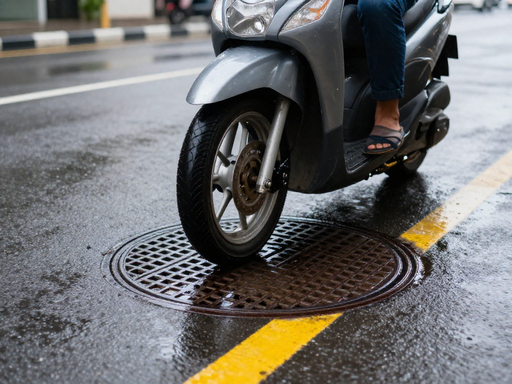
Understanding the Dangers: Why Potholes, Wet Paint, and Manholes are Risky
On two wheels, even a small surface irregularity can upset your balance. Potholes, wet paint, and metal manhole covers share a common threat: they dramatically reduce the traction your tyres need to stay upright. When a scooter or motorbike tyre rolls over a pothole, the sudden change in surface can deflect the wheel laterally. At speed, this deflection translates into a wobble or, worse, a loss of steering control. Wet paint and polished manholes become dangerously slick because water creates a thin film between the rubber and the surface. Braking, accelerating, or leaning on these spots can cause a rear-wheel slide or a front-end tuck with little warning.
Malaysian roads amplify these risks. After frequent tropical downpours, potholes appear overnight, and pooled water conceals their true depth. Road markings remain wet longer on humid days, and manhole covers stay greasy from vehicle fluids. Monsoon seasons turn familiar commuting routes into obstacle courses, demanding extra vigilance from riders.
Such hazards are a leading factor in single-vehicle motorcycle falls, often resulting in abrasions, fractures, and expensive repairs. While hard figures vary, local news reports regularly link rain-slicked surfaces and unrepaired potholes to rider injuries. The silver lining is that most encounters are manageable. With the right approach—scanning ahead, adjusting speed, and using smooth inputs—you can navigate these everyday threats safely. In the sections that follow, we’ll break down exactly how to handle each one.
Mastering Potholes: Approach and Escape
The key to handling potholes safely starts long before you reach them. Keep your eyes scanning the road surface at least 10 to 15 meters ahead, especially in areas known for poor road conditions or after heavy rain. The earlier you spot a pothole, the more time you have to make a calm decision.
If the road is clear and you have enough space, a gentle swerve around the hole is often the best choice. Always check your mirrors and blind spot first, and never jerk the handlebars suddenly. If traffic or lane position makes it risky to change direction, it’s safer to ride through the pothole in a controlled manner.
Before you reach the hole, ease off the throttle and apply both brakes smoothly to reduce speed. Avoid braking hard while your wheels are actually in the pothole, as this can compress the suspension abruptly and throw you off balance.
As you approach, rise slightly off the seat by standing on the footpegs. This allows your legs to absorb much of the impact, keeping the bike more stable. Keep your knees bent and your body loose but ready. Grip the handlebars firmly but not rigidly—your arms should act as shock absorbers too.
Keep the handlebars straight as the front wheel enters the hole. Turning or leaning the bike at this moment can cause a loss of traction. Let the suspension do its job, and look ahead to where you want to go, not down into the hole.
Once you’ve cleared the pothole, gently roll on the throttle. This helps the bike settle back into a stable line and maintains momentum. Avoid snapping the throttle open, especially on wet or sandy roads, as this could cause the rear wheel to spin.
Practice this sequence in a safe area if possible. With time, the process becomes instinctive, and you’ll handle unexpected road damage with confidence.
Tackling Wet Paint and Slippery Manhole Covers
When you approach a patch of wet paint or a metal manhole cover, the key is to minimise the demands on your tyres. Even a fresh, well‑maintained set of rubber can struggle for grip on these surfaces, especially in the rain. The most important thing is to keep the bike as upright as possible – the less you lean, the more contact patch you have and the less likely the tyres are to slide.
Do your braking early, while you’re still on clean tarmac, and then roll through the hazard with a steady throttle. Avoid grabbing the brakes, snapping the throttle open, or making any sudden steering corrections. Smoothness is everything; imagine you’re riding with a glass of water on the tank.
Keep your body relaxed and centred on the bike. Grip the tank with your knees only lightly, and let the motorcycle move a little underneath you if it encounters a minor slip. Fighting a tiny slide can unsettle the bike more than the slip itself. Look ahead to where you want the bike to go – focus on the exit path, not on the shiny surface right in front of your wheel. Your eyes lead the bike, so if you stare at the hazard, you’re more likely to steer towards it.
As soon as both tyres are back on dry, grippy tarmac, smoothly pick up your normal pace. Don’t accelerate hard the moment you’re clear; wait until you’re fully settled and upright before adding more throttle or lean. With a little patience and these gentle inputs, wet paint and manhole covers become just another part of the ride, not a panic moment.
General Riding Posture and Bike Control Techniques
A relaxed but alert posture forms the bedrock of your control over the bike, especially when you’re navigating the unpredictable surfaces of Malaysian roads. Keep your shoulders loose, elbows slightly bent, and your knees gently gripping the tank—this allows your body to act as a natural shock absorber when you hit an uneven patch. Stay upright with your head up, scanning ahead for potential hazards like potholes, wet lane markings, or shiny manhole covers. The moment you stiffen up, you transfer shock directly to the handlebars and lose fine steering input.
For cornering, adopt the ‘slow, look, press, roll’ approach every time. Slow down before the turn, using both brakes smoothly while you’re still upright. Look through the corner to where you want to end up, not at the immediate obstacle. Press the handlebar in the direction of the turn to initiate lean—countersteering is subtle but essential. As you reach the apex, gradually roll on the throttle to settle the suspension and exit with stability. This method keeps your bike balanced and lets you react smoothly if you suddenly spot a slippery manhole mid-turn.
Emergency braking is a skill you can’t afford to learn on the spot. Find a quiet, empty parking lot and practise stopping from moderate speeds. Focus on progressive squeeze of the front brake lever while tapering off the rear—never snatch or grab. Build muscle memory so that when a hidden pothole or fresh wet paint catches you by surprise, your fingers already know what to do without panic.
Your tyres are your only contact with the road, so treat them with respect. Inflate them to the manufacturer’s recommended pressure at least once a week—underinflation kills handling and makes rims vulnerable to pothole damage. Check tread depth regularly; a good tread pattern is critical on Malaysia’s tropical roads, where sudden rain can leave standing water and painted lines slick as ice. Consider tyre types that suit your daily ride: commuter-friendly patterns with silica-enhanced compounds often offer better wet grip and longevity.
Lastly, dress for the slide, not just the ride. Full-finger gloves give you a secure grip on the controls and protect your hands in a fall. Sturdy over-the-ankle boots provide grip when you put a foot down on a slick surface and shield your feet from debris kicked up by traffic. Together with an approved helmet and a riding jacket, your gear adds an extra layer of control and confidence, letting you focus on the road ahead rather than worrying about what’s under your wheels.
Quick Recovery: What to Do When You Lose Traction
If you feel your tyres slipping, stay calm and resist the urge to grab the front brake sharply—that can lock the wheel and worsen the slide. When the rear wheel skids, ease off the throttle smoothly and let the bike’s momentum settle; don’t fight the bars. For a front-wheel slide, immediately release the brake and steer gently in the direction of the skid to help the tyre regain grip. Keep your eyes focused on a clear escape path, not the obstacle, and guide the bike toward it with light, deliberate inputs. Once you’ve recovered control, signal and pull over to a safe spot, then take a moment to steady your breathing and visually check your tyres and rims for damage before continuing.
FAQ
What speed should I go when riding over a pothole?
Approach at a controlled, reduced speed—ideally under 20 km/h if you cannot avoid it. Slow down before the pothole, not while crossing it, and maintain a steady throttle to keep the bike stable. Avoid sudden braking or acceleration over the uneven surface.
Is it better to swerve or ride straight over wet paint?
If you can safely swerve without endangering yourself or others, gently steer around the wet paint. If swerving isn’t possible, ride straight over it at a steady speed without braking, leaning, or accelerating, as wet paint significantly reduces traction. Always check your mirrors and surroundings before any evasive action.
How can I stop safely if I need to brake on a slippery manhole cover?
Try to avoid braking directly on the manhole cover; if you must brake, apply both brakes smoothly and progressively, with more emphasis on the rear brake to reduce the risk of front-wheel lockup. Release the brakes the moment you feel a skid and reapply gently once off the metal surface. Keep the bike as upright as possible and look ahead to where you want to go.
What type of tires are best for Malaysian roads with many hazards?
Choose tires with good wet-weather performance and durable tread compound, such as sport-touring or all-season tires from reputable brands like Michelin, Pirelli, or Metzeler. Tires with deeper grooves and silica-rich rubber offer better grip on wet, debris-strewn surfaces common on Malaysian roads. Ensure your tires are properly inflated and have sufficient tread depth for optimal hazard handling.
Should I stand up on the footpegs when crossing a large pothole?
Yes, if you are riding an off-road or dual-sport motorcycle with appropriate suspension, standing on the footpegs can help absorb the impact and maintain control. For scooters or small-capacity bikes with a floorboard, it’s usually not possible or safe to stand; instead, slow down and keep your knees bent and body loose to act as a human suspension. Never attempt to stand if it compromises your balance or grip on the handlebars.
How does rain affect the danger of these road surfaces?
Rain makes potholes harder to see as they fill with water, and wet paint and manhole covers become extremely slippery, especially during the first downpour after a dry spell when oil and dust rise to the surface. Reduced visibility and longer braking distances compound the risk, so riders should slow down, increase following distance, and avoid abrupt inputs on all controls.