Seasonal Balcony Lighting for Plants and Ambiance
Transform your balcony into a season-round sanctuary where plants thrive and evenings glow. Discover the perfect blend of functional grow lights for chilly months and solar-powered décor for summer nights—no outdoor outlet required.
Understanding Your Balcony’s Light Needs Season by Season
The first step to great balcony lighting—for your plants and your atmosphere—is knowing exactly what kind of natural light you're working with. And here's the thing: it changes. A lot. What works in June might leave your ferns struggling in November, or your cozy reading nook in full glare come spring.
So grab a notebook or download a sun-tracking app, and let's get to know your balcony's light personality across the year.
Start with Orientation
Your balcony's direction is the biggest clue. Here’s the quick breakdown:
- North-facing balconies get the least direct sun—mostly gentle, indirect light. Great for shade-lovers like ferns and peace lilies, but tricky for sun-hungry herbs or succulents. Supplemental lights become essential in darker months.
- South-facing spaces are the sun magnets. You’ll get long hours of bright, direct light, especially in summer. Watch for scorching on delicate leaves, and consider sheer curtains or a movable shade if it gets too intense.
- East-facing balconies catch soft morning sun, which is perfect for many flowering plants and veggies. Afternoons are shaded, so the light drops off quickly.
- West-facing spots receive strong afternoon and evening sun, which can be intense in summer. Plants that like warmth thrive here, but you might need to shield them during heatwaves.
Not sure? Observe where the sun rises and sets from your balcony, or use a compass app. Even a few degrees off can shift the light pattern significantly.
Track the Daily Dance
Spend one day each season—or better, one day a month—noting when direct sunlight hits your floor, walls, and railing. A simple grid sketch works: divide your balcony into zones, and mark the times they get sun. You’ll start to see patterns. Maybe that corner by the door is sunny from 8 to 10 a.m. in March but becomes a shady pocket by May because of a neighbor’s tree. Jot down shadows from buildings, overhangs, or your own furniture.
This log is gold when you’re deciding where to place light-hungry plants or where to hang festoon lights for the best evening glow.
Seasonal Shifts Matter
Daylight hours swing dramatically. In most of the US, winter days can be under 10 hours, while summer stretches past 15. That means your plants’ natural light diet changes. A south-facing succulent might thrive on winter windowsill light but need less direct exposure in July. Meanwhile, a north-facing balcony might feel downright gloomy in December—perfect timing for a full-spectrum grow light.
Pay attention to the sun’s angle, too. In winter, the sun sits lower in the sky, so shadows are longer. That overhang that didn’t block anything in August could cast a giant shade cloak in January. In summer, the high midday sun might completely miss a deep-set corner, while winter’s low sun could reach right in.
Spot the Shade Makers
Your balcony’s shade isn’t static. Railings, privacy screens, nearby trees, and adjacent buildings all cast moving shadows. Leafy trees might block light in summer yet let it pour through bare branches in winter. A solid railing could create a permanent shadow strip on the floor. Even your own tall plant stands or shelves can inadvertently shade smaller pots.
Take snapshots or notes at different times of day and month. You don’t need perfection—just a rough sense. That way, when you add playful string lights or a dedicated grow lamp, you’ll know exactly where it’ll make the biggest difference for both your plants and your evening ambiance.
Armed with this seasonal awareness, you’ll move from guessing to growing with confidence. And the best part? Your balcony will feel like a personalized slice of the outdoors, with lighting that works with nature, not against it.
Best Grow Lights for Balcony Plants in Fall & Winter
When daylight fades and your balcony becomes more shadow than sun, the right grow light can keep your plants thriving. But with so many options, it’s easy to feel lost. Let’s break down what works best in small balcony spaces, so you can choose with confidence.
LED vs. fluorescent: which one suits your balcony?
- LED grow lights are the energy-efficient champions. They produce very little heat, so you can place them close to leaves without scorching—perfect when space is tight. Full-spectrum LEDs support both leafy growth and flowering, and they last for years. The upfront cost is higher, but you’ll save on electricity.
- Fluorescent lights (CFL or T5 tubes) are budget-friendly upfront and widely available. They run hotter and are bulkier, but their gentle light is ideal for seedlings and leafy greens. They need to be replaced more often and use slightly more power, so think long-term.
For most balcony gardeners, a compact LED panel or clip-on LED fixture is the smarter, sleeker choice.
Matching wattage to your plant cluster
Don’t let wattage numbers intimidate you. It’s about light coverage, not blinding brightness. As a rule of thumb:
- A 15W–20W LED can cover a cluster of 2–3 small plants or a single larger one (roughly 1’x1’ area).
- For a shelf of plants spanning 2–3 feet, look for a 30W–45W panel.
- If you’re lighting a narrow railing planter, a 20W bar light works beautifully.
Always check the manufacturer’s recommended hanging height and coverage. Many LED panels include this in the specs. Start at the top of that range and lower gradually if plants look leggy.
Space-savvy mounting: clip, stand, or hang
Balconies demand creativity. Choose a fixture style that fits your setup:
- Clip-on lights attach to railings, shelves, or pots. They’re super flexible and require zero installation. Perfect for renters.
- Adjustable gooseneck stands sit on the floor or a bench and let you direct light exactly where it’s needed. They’re easy to move as plants rotate.
- Hanging fixtures free up valuable floor space. Mount a slim LED bar or a pendant fixture from an overhead hook or tension rod. This works especially well above a plant shelf or window box.
Whichever you choose, keep the light 6–12 inches above the foliage for optimal absorption without heat damage.
Set timers and mimic the sun
Consistency matters more than intensity. Plants respond to day length, so a simple timer keeps them on track without you having to remember. Set your light to run 12–16 hours a day—roughly matching fall and winter daylight. A basic plug-in mechanical timer costs under $10 and eliminates guesswork. For extra control, smart plugs let you program schedules from your phone, even if you’re away.
Budget-friendly picks under $30
You don’t need to spend a fortune to keep your balcony green. Here are a few tested options that punch above their price:
- GE BR30 Grow LED Bulb (9W) – Fits any standard lamp socket; great for a single spotlight on a star plant.
- Sansi 15W LED Grow Light Bulb – High-lumen, ceramic-housing bulb that works in a clamp reflector.
- GooingTop Clip-On Grow Light (10W) – Dual-head LEDs with a flexible gooseneck and strong clamp, perfect for small clusters.
- Barrina T5 LED Bar Light (20W) – Linkable, low-profile bars that can be mounted under shelves or railing.
These picks are all under $30, energy-sipping, and well-reviewed by indoor gardeners. They’re ideal for giving your balcony plants a boost through the darker months.
Solar-Powered Lighting for Spring & Summer Ambiance
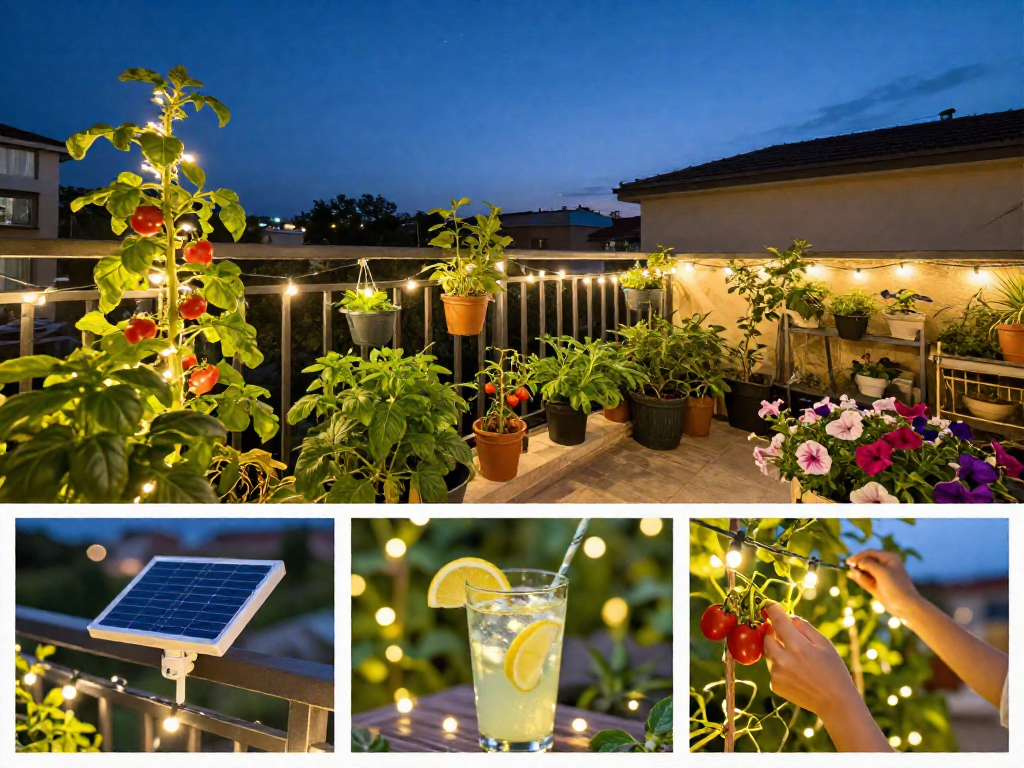
Spring and summer on a balcony mean longer days, gentler evenings, and enough sunlight to power a charming display of solar lights. Best of all, solar-powered lighting is eco-friendly and requires zero wiring—just place the solar panel where it can catch direct rays, and let the sun do the rest. Here’s how to layer in decorative lighting that turns your balcony into a cozy nighttime retreat.
Start with string lights for that classic, inviting glow. Drape them along your railing, zigzag them overhead, or wind them around a trellis. Because they charge for hours under the summer sun, they’ll stay bright well into the evening. Lanterns set on a side table or hung from hooks add a soft, portable accent, while pathway stakes can line the edge of your balcony floor or planters for a gentle, guided feel. Look for options with separate solar panels so you can position the panel at a sunny corner even if the light itself sits in partial shade; that flexibility is a game-changer on tight balconies.
Placement matters most for reliable performance. Aim to put every solar panel where it will receive direct, unobstructed sunlight for the majority of the day—railing edges, open corners farthest from building shadows, or even mounted on a hook facing outward are perfect. If your balcony is partly covered, experiment with small clip-on panels or stake-style lights that you can angle toward the sun. Remember: even a few hours of strong midday sun can give you hours of gentle light.
For a truly whimsical touch, weave micro fairy lights into your planters or climb them up a trellis tangled with vining plants like sweet peas or morning glories. These tiny LEDs come in weatherproof strands and add a magical sparkle to your container garden. Opt for warm-white tones to create a cozy, candlelit feel, or go for color-changing modes if you want to match a festive mood—a soft shifting between pink and gold can feel especially dreamy on a summer night.
Durability is key when lights stay outside all season. Seek out IP65-rated or higher lights, which stand up to rain, dust, and summer storms without faltering. Many solar lights now use durable plastics and rust-resistant metals, so you can leave them up and enjoy spontaneous evenings outdoors without worry. With the right placement and a touch of creativity, solar-powered lights become the easiest way to make your balcony glow well past sunset—no outlet needed.
Combining Functional and Decorative Lighting Year-Round
Layering grow lights with ambient lighting transforms your balcony into a space that works hard for your plants and creates a cozy retreat for you. The key is designing a flexible setup that adapts to each season while keeping things simple and safe.
Start with power management. A weatherproof, outdoor-rated power strip gives you multiple outlets to run everything from a single source, and adding smart plugs lets you control different lighting zones right from your phone. That means you can program grow lights to turn on during peak daylight hours and schedule decorative lights to welcome you home each evening—no crawling under furniture or braving bad weather to flip switches.
Think of your lighting in two layers: functional for healthy plants, decorative for human enjoyment. During the shorter days of fall and winter, a timer-connected grow light above your leafy greens ensures they get the full-spectrum light they need while you’re at work. Once the sun sets, switch over—automatically with a smart outlet or manually with a dimmer—to softer, warmer lights that make your balcony feel like an outdoor living room. Look for full-spectrum LED grow lights that double as pleasant task lighting during the day; many now come in warm white tones that blend nicely with your decor.
Dimmers are the secret to transitioning from plant time to hangout time. Install an inline dimmer or choose fixtures with built-in dimming to gently bring the light level down. For an even cozier glow, mix in candle-style LED lights or flameless hurricane lanterns. Place a few lanterns on side tables or hang them in clusters; their flicker mimics real flame without any fire risk, and they pair beautifully with the steady light of your grow fixtures. By arranging functional and decorative sources together, you create a seamless, layered look that feels intentional rather than a jumble of devices.
Seasonal rotation keeps your balcony fresh and energy-efficient. In spring and summer, take advantage of longer days: step down the grow light usage and lean into solar-powered string lights or lanterns for ambiance. Go for lighter materials like sheer fabric shades or rattan-wrapped LEDs that reflect the airy vibe of the season. As autumn and winter arrive, bring back the warm LED bulbs and add a touch of coziness with soft, gold-toned lights. You might drape a set of warm micro fairy lights around a shelving unit or wind them through a trellis where your vines rest for the winter. These small shifts signal the change of seasons and keep your balcony inviting all year.
Safety is always first. Check that every cord, plug, and connection is rated for outdoor use and protected from rain—even on a covered balcony, moisture can sneak in. Use cable clips to keep wires tidy and out of walkways. If you’re using smart plugs, make sure your Wi-Fi reaches reliably to your outdoor space; a mesh extender can help if needed.
Finally, don’t be afraid to experiment. Start small with one dual-purpose zone—perhaps a shelf with a grow light above a collection of herbs, surrounded by a few solar stake lights tucked into the pots. Over time, you’ll discover the combos that make your balcony feel both productive and peaceful. With a little planning, your lighting does double duty: nurturing your plants through every season and turning your urban outdoor space into a place you crave at the end of the day.
FAQ
Can I use regular LED bulbs as grow lights for my balcony plants?
Regular LED bulbs lack the full light spectrum that plants need for healthy growth, especially for flowering or fruiting. Instead, choose LED grow lights labeled as full-spectrum to provide both cool and warm light, supporting all growth stages effectively. If you’re using them only for short periods and have low-light plants, they may supplement natural light but won’t replace dedicated grow lights.
Do solar lights work on a shaded balcony?
Solar lights rely on direct sunlight to charge their batteries, so on a shaded balcony they often produce dim or short-lived illumination. You can try attaching the solar panel separately in a sunnier spot if the design allows, or consider low-voltage electric lights as a more reliable alternative. For purely decorative accent, some solar lights with efficient panels can still work in bright, indirect light.
How do I protect balcony lighting from rain and snow?
Use lighting fixtures rated for outdoor/wet locations (look for an IP65 or higher ingress protection rating). For plug-in lights, protect connections with weatherproof covers and ensure any extension cords are also outdoor-rated. In snowy conditions, gently brush off accumulation to prevent water damage or ice buildup, and unplug or store portable lights when not in use during severe weather.
What’s the best way to hide cords on a small balcony?
Run cords along railings, walls, or floor edges using adhesive cord clips or raceways that blend with your balcony’s color. You can tuck them behind furniture, planters, or a small outdoor rug. For hanging lights, use a single extension cord and branching connectors to minimize clutter, and consider cordless, rechargeable or solar options to reduce visible wiring.
How many hours a day should I run grow lights in winter?
Most edible and flowering plants benefit from 10–14 hours of supplemental light daily in winter to simulate longer days. Leafy greens and herbs often do well with around 12 hours, while fruiting plants like tomatoes may need up to 14–16 hours. Use an outlet timer to automate the schedule and prevent overexposure, and watch for signs of stress like pale or scorched leaves to adjust the duration.