Are Cheap Full-Face Helmets Dangerous? What the Safety Stickers Don't Tell You
A sudden spill at a traffic light, a shattered visor, and a ringing headache — it’s the moment every rider dreads. You paid RM200 for your full-face helmet, but did you get RM200 worth of protection? We dig past the shiny stickers and bold claims to find out if cheap helmets are a false economy or a smart buy for Malaysian riders.
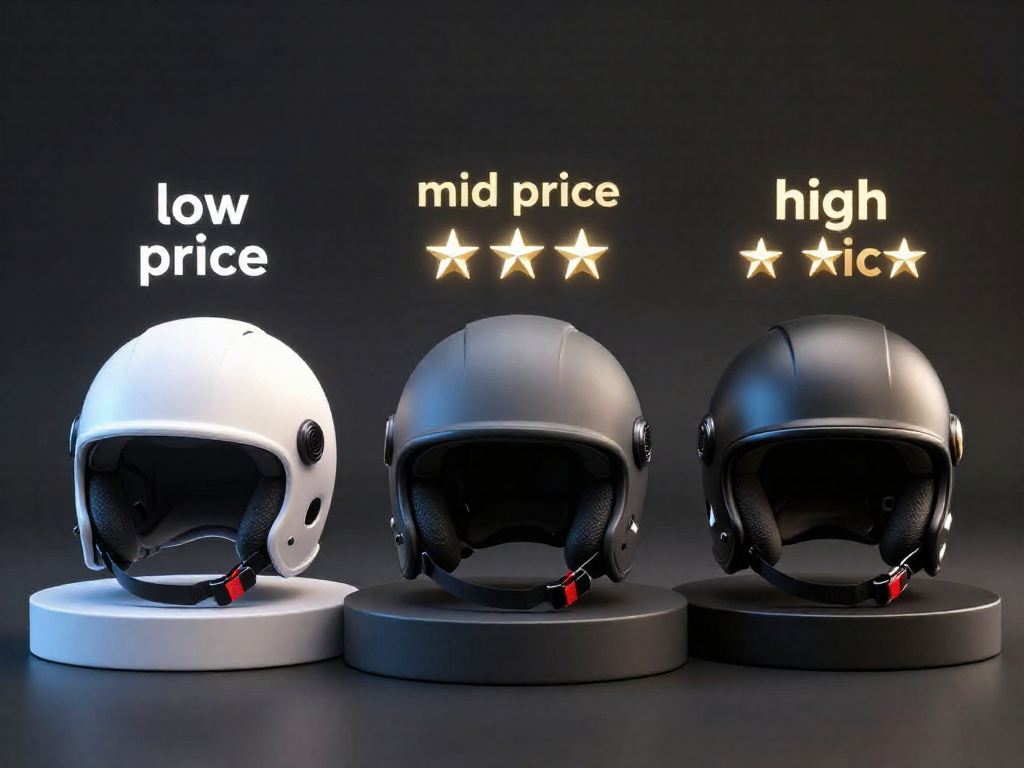
The RM200 Question: Can a Cheap Full-Face Helmet Really Protect You?
Yes—a budget full-face helmet can still protect you, but only if it carries a genuine safety certification and fits properly. The sticker alone isn't a guarantee.
Walk into any accessory shop along Jalan Ipoh and you’ll see rows of full-face helmets under RM200. For a daily commuter facing KL’s traffic and sudden thunderstorms, the temptation is real. But after videos circulated last year of a cheap helmet splitting apart in a minor collision, many riders started questioning whether saving a few ringgit is worth the risk.
This article digs past the flashy graphics and SIRIM labels to reveal what actually separates a safe bargain from a dangerous knock-off—and what most riders overlook until it's too late.
The Safety Sticker Illusion: What SIRIM, DOT, and ECE Certifications Actually Mean
In Malaysia, you’ll find three main certification marks on full-face helmets: the local SIRIM label, the American DOT, and the European ECE, often written as ECE 22.05 or the newer ECE 22.06. Each one signals that a helmet model has passed a battery of laboratory tests, but the testing protocols and enforcement differ in ways that let cheap helmets sneak through. Understanding what those tests actually measure and where the loopholes hide shows why a sticker alone is a poor proxy for safety.
Impact absorption is the headline test. A helmet is strapped onto a metal headform fitted with an accelerometer and dropped from a controlled height onto a flat or hemispherical anvil. The peak linear acceleration measured inside tells you how much energy the helmet transmits to the skull. ECE 22.06, for instance, demands the helmet hit at least 13 different points, including oblique impacts that mimic rotational forces, and keeps the head injury criterion below strict thresholds. DOT’s test is similar but older: it uses a guided free-fall drop onto flat and hemispherical anvils, measuring peak G, and allows a higher ceiling of 400 G for a 2-millisecond clip. SIRIM largely piggybacks on ECE testing but adds a penetration test where a 3 kg striker is dropped onto the shell to ensure it doesn’t puncture. A retention test then yanks the chin strap with a dynamic load to confirm the buckle and strap won’t snap or slip off your chin.
Here’s the catch. DOT certification relies almost entirely on self-certification. A manufacturer puts the DOT sticker on a helmet after conducting its own in-house tests and promises it meets the standard. The National Highway Traffic Safety Administration only tests random samples bought from retailers after the fact, and only a tiny fraction ever get pulled. It’s a system built on trust, and some offshore factories exploit that trust mercilessly. A helmet with a DOT sticker may have never seen a real lab. ECE is stricter: independent labs must test samples submitted by the manufacturer for approval. However, sample bias is a real problem—factories can hand-pick pristine samples while production units get cheaper, thinner shells and minimalist EPS liners. SIRIM adds a factory inspection component, but periodic audits can’t catch batch-to-batch drift, especially in high-volume budget runs.
Moreover, these tests are performed at specific impact speeds and angles. A DOT test drops a helmet from about 1.8 meters to simulate a fall, but real crashes often involve higher velocities and secondary impacts. ECE 22.06 has improved the realism with oblique impact tests, but even that doesn’t account for every scenario like a direct edge strike at 50 km/h. The sticker says it passed a controlled lab environment, not that it will save you when your head hits a curb at an awkward angle.
So when you see a cheap full-face helmet sporting three shiny stickers, remember that they certify the minimum standard, not consistent excellence. Counterfeit stickers are common in street markets, and even legitimate ones can adorn helmets that just barely scraped a pass. In Malaysia’s heat, budget helmet liners compress quickly, the EPS hardens, and the shell may crack after a single drop in a parking lot. The sticker is a starting point, but the real test is the manufacturer’s commitment to quality control—something a RM150 sticker cannot buy.
Beyond the Sticker: What Crashing in Real Life Tells Us About Helmet Safety
A certification sticker tells you a helmet passed a controlled lab test, but it doesn't rank how well it performed. That's where independent testing programs step in, and the results can flip your assumptions about price and protection upside down.
The UK's SHARP (Safety Helmet Assessment and Rating Programme) tests more than just a single impact. Helmets are dropped at various speeds and angles, with sensors measuring the force transmitted to the headform. Crucially, SHARP assigns a simple 1-to-5-star safety rating, making it easy to compare models side by side. Unlike passing a standard, these stars reveal wide performance gaps even among certified lids. A budget helmet with a 5-star SHARP rating often outperforms a premium-branded helmet that barely scrapes by with 2 or 3 stars. For instance, the sub-RM400 HJC C70 earned a full 5 stars, while certain race-replica lids costing three times as much stalled at 3. It's a wake-up call: designer labels and carbon-fibre price tags don't automatically translate to superior crash protection.
What causes this variance? Lab tests assess linear impacts the most rigorously. Yet real-world crashes are messy—most involve glancing blows and rotation. That rotational force is a silent danger; it can strain brain tissue and lead to injuries that a standard sticker never measures. That's why technologies like MIPS exist, and why helmets that perform well in standard tests might still leave you vulnerable to diffuse axonal injury if they lack rotational mitigation. SHARP doesn't directly measure rotation, but Snell's updated M2020 standard and the CRASH initiative have started addressing it. Still, for Malaysian riders, the easiest way to gauge real-world performance is the star rating.
Back home, we're not starved for choice—many helmets sold in Malaysia have SHARP scores you can check right now. The KYT TT-Course, a common track-day pick, earned 4 stars. The LS2 Rapid, a commuter favourite, secured 3 stars. Before buying any helmet, type its model into the SHARP website. Don't stop at the star count—download the full report. You'll see a colour-coded impact map showing exactly where the helmet provided the most and least protection. A 4-star helmet with weak spots over the temple area might be riskier than a 3-star lid with uniformly green zones. Avoid helmets whose manufacturers refuse to publish independent test results—if they're hiding something, you don't want it on your head.
SIRIM certification is legally required in Malaysia, but remember, SIRIM is a pass/fail quality check, not a performance ranking. Use SHARP as your second opinion. A helmet that combines a high SHARP rating, a snug fit, and a polycarbonate or composite shell suited to your riding style is a smart buy. You don't need to drain your savings—a RM300 lid can beat a RM1,500 one on the science. Channel the leftover cash into abrasion-resistant riding gear or an advanced riding course.
Treat a fully-rated helmet as a single-use safety device. After any significant impact, retire it. The EPS liner crushes once; it can't protect you twice. Even a small drop from waist height can compromise the foam's integrity. That's the untold story: safety stickers guarantee a minimum, but independent testing reveals who goes the extra mile. Spend wisely, not blindly.
More Than a Shell: Fit, Comfort, and the Things You Overlook That Compromise Safety
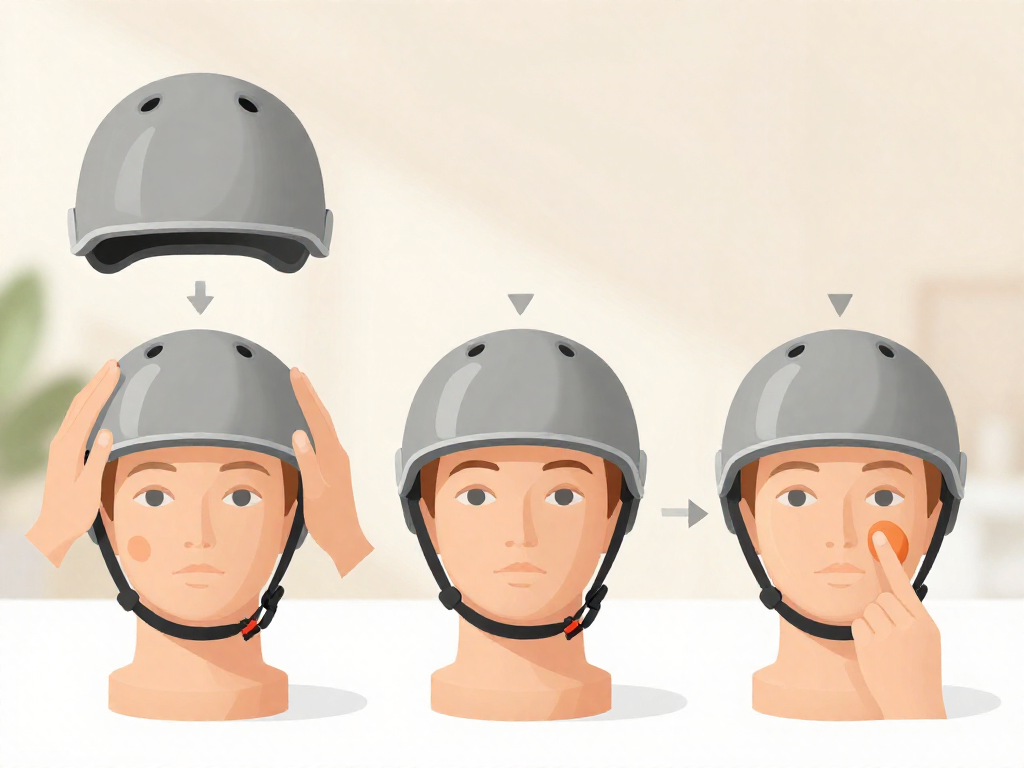
A helmet’s safety promise lives in the details beyond its outer shell. Even a top-tier ECE-rated lid becomes useless if it doesn’t fit your head properly or if it’s been silently compromised. When you try on a helmet, it should feel uniformly snug—think a firm handshake around your entire skull—without painful pressure points. After fastening the chin strap, push the front of the helmet upwards: if your face peeks out, the size is too big. The cheek pads should squish your cheeks until you’re slightly biting the inside; this firmness will break in but never become loose. Also, head shape matters more than you think. A budget helmet might only come in one internal shape, so if you’re an oval head stuck in a round shell, you’ll end up with dangerous gaps.
That new helmet you accidentally dropped from your bike seat? The EPS foam inside may have compressed just enough to reduce its impact-absorbing capacity without leaving a scratch on the shell. No visible damage doesn’t mean no damage at all. Treat every drop as a potential write-off; if you’re in doubt, replace it.
Helmet longevity isn’t infinite. The five-year rule is a good benchmark: over time, the EPS liner hardens and the comfort padding packs out, loosening the fit. In our Malaysian heat and humidity, sweat and UV rays accelerate degradation, so check the manufacture date sticker inside the shell. And never ride in a helmet you’ve crashed in—the foam did its job by crushing, and it won’t do it again.
Some of the most common safety slip-ups are the simplest. Riding with the chin strap dangling because “it’s just a quick run” is asking for a helmet ejection. Adjust it so only one or two fingers can squeeze under the strap when properly fastened. Buying a used helmet might seem thrifty, but you’re inheriting unknown drops, degraded foam, and someone else’s bacterial colony. Finally, if the interior lining has compressed so much the helmet wiggles, it’s time to move on. Your brain deserves better than a worn-out bucket.
The Price-Safety Paradox: Why Expensive Helmets Aren't Always Safer (and Cheap Ones Aren't Always Death Traps)
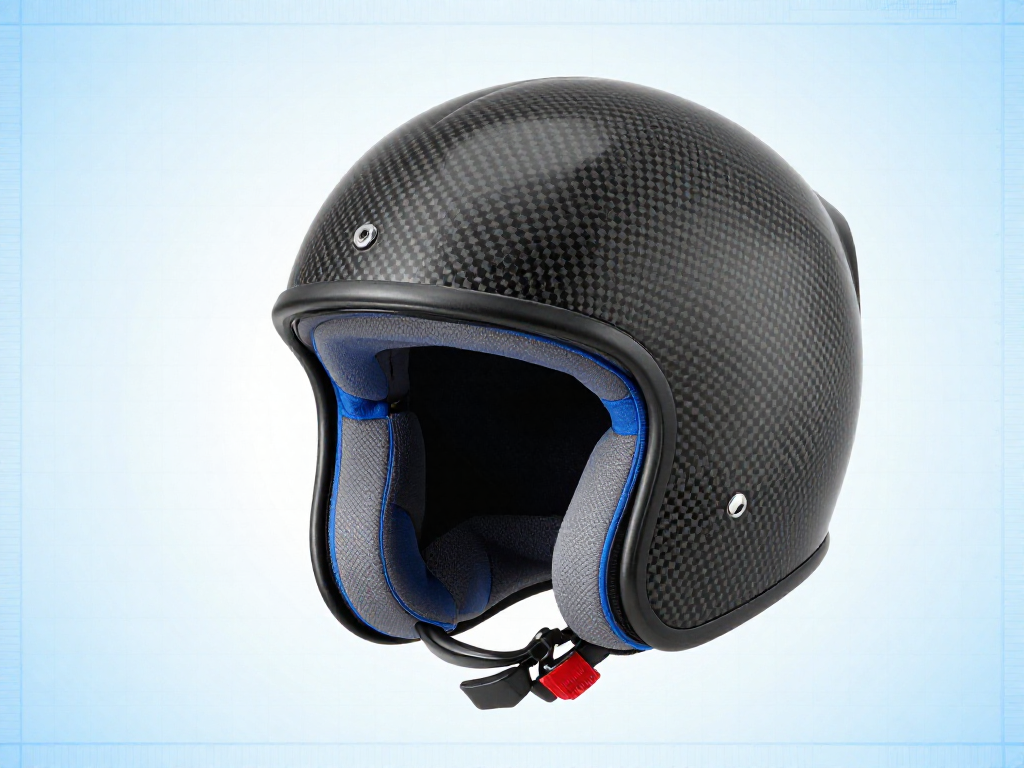
A steep price tag does not automatically buy better impact protection. Much of what drives helmet cost has little to do with safety: exotic shell materials like carbon fibre, wind‑tunnel‑honed aerodynamics, plush interior fabrics, and brand marketing budgets all inflate the price. When you strip away those layers, the blunt truth is that a well‑designed polycarbonate shell with properly tuned EPS liner can absorb energy just as competently as a handmade composite shell.
Take the Sharp testing programme as an objective yardstick. Several helmets priced under RM400 have earned four or five stars, while some premium lids in the RM2000‑plus bracket have scraped by with only three. The MT Revenge and LS2 Rapid are two familiar examples that consistently punch above their price point, proving that shell material is only one piece of the puzzle. Polycarbonate is heavier, yes, but it is also inherently flexible, which helps it deform and disperse impact forces before the EPS even enters the equation. A dense, multi‑density EPS liner, meticulously shaped, does the rest. Conversely, a carbon‑fibre helmet can be so stiff that it transfers more energy to the rider’s head unless the EPS is carefully tuned—something that does not always happen.
Beyond roughly RM800 to RM1000, the safety curve flattens dramatically. You are no longer paying for a safer helmet; you are paying for quieter ventilation channels, a few hundred grams less mass, a fog‑free Pinlock insert, or a racer‑endorsed paint scheme. These are real benefits for comfort, but they do not make the difference between walking away and a serious head injury. A budget full‑face that fits snug and carries legitimate certification is already performing the same core task.
So skip the guilt: a well‑chosen cheap full‑face is not a death trap. The danger lies in ignoring fit, using a helmet past its life span, or trusting an uncertified novelty shell. Spend what your budget allows, but put your priority on the sticker inside the chin bar, not the logo on the outside.
Smart Shopper's Guide: How to Pick a Safe, Budget-Friendly Full-Face Helmet in Malaysia
A budget full-face helmet can absolutely protect you—if you shop smart instead of just grabbing the cheapest shell off the rack. Start your checklist with the sticker that matters most: ECE 22.06. This is the latest European standard and a far tougher benchmark than the basic SIRIM mark you’ll find on every helmet sold here. Many budget models sold in Malaysia carry both, but if a helmet only boasts SIRIM, skip it. You want that ECE label, usually sewn into the chin strap or moulded on the shell. Next, pop out the cheek pads and inspect the EPS liner. It should feel dense and even, not like soft styrofoam. Look for multi-density layering—you’ll often see two distinct colours—and make sure the liner covers the entire crown and temple area without gaps or thin spots. Fasteners are a make-or-break detail. Double D-rings remain the safest closure system; avoid anything with a plastic quick-release buckle that feels flimsy or doesn’t lock with a positive click.
Before you hand over cash, spend five minutes on independent test sites. The UK’s SHARP programme (sharp.dft.gov.uk) rates helmets based on impact performance and is free. Plenty of affordable lids like the LS2 Rapid, HJC CS-15, and certain SMK models earn four or five stars, proving price isn’t everything. Cross-check those models on local forums or YouTube teardown reviews where you can see the EPS quality firsthand. Steer clear of sellers who can’t tell you the exact model number or certification details—a red flag for counterfeits, which are still common in online marketplaces and cheaper shop lots. An authentic ECE sticker has a holographic effect when tilted; fakes are often just a flat print with spelling errors. Buy only from authorised dealers with a physical store and good after-sales support, even if it means paying slightly more.
Now the golden rule: never buy without a fitting session. A helmet that doesn’t fit properly won’t protect you, regardless of certifications. Wear it for ten to fifteen minutes in the shop. It should hug your cheeks and crown snugly—no painful pressure points, but no rotational play either. Rock the helmet forward and backward; your scalp should move with the inner liner, not slide inside. While you’re at it, check the visor operates smoothly without jamming, the ventilation sliders don’t snap off easily, and the inner padding stitching is straight with no loose threads. If a shop refuses to let you try multiple sizes or rushes you out, just walk away.
Price-wise, RM200 is a realistic floor for a new, properly certified full-face helmet in Malaysia. Below that, you’re typically looking at older ECE 22.05 stock (still protective, but less rigorously tested) or models that have cut corners on liner density and shell material. The GIVI 50.6, LS2 FF320 Stream, and certain SMK Stellar variants often hover just above that mark and deliver genuine ECE 22.06 protection. Crossing the RM150 line is where you start to see non-removable liners, single-density EPS, and suspect shell flex. A cheap helmet isn’t automatically a death trap, but the margin for error gets tight. Stick to your checklist, trust your hands and head over flashy graphics, and you’ll ride away with a lid that works hard without emptying your wallet.
My Verdict: Don't Gamble with Your Head, But Don't Overpay Either
A cheap full-face helmet can absolutely protect you—if it carries a legitimate SIRIM or ECE sticker and fits snugly without pressure points. I’d rather see a rider in a well-fitted RM200 certified lid than a loose RM800 helmet with fancy graphics. Your brain doesn’t care about brand prestige. Spend wisely on the helmet that passes the tests, fits your head shape, and stays on during a slide. Then wear it correctly—chin strap always buckled, no shortcuts—every single ride. That’s the real safety hack.