How to Arrange Pots on a Balcony for Maximum Sunlight Exposure
If your balcony feels more like a cave than a sun-soaked oasis, don’t despair—with a few strategic pot arrangements, you can coax more light onto your plants and create a thriving urban garden.
Understand Your Balcony's Sun Patterns
Before you place a single pot, you need to become a sun detective. Your balcony's light isn't uniform—it shifts with the season, the time of day, and your building's shadows. Spend at least one full weekend simply observing where the sun lands. Grab a notebook or use your phone's notes app to log sunny patches each hour. You might notice that morning light hits the far corner while afternoon sun bakes the railing. These are the clues for future plant placement.
A sun tracking app can make this easier—many free ones let you map your balcony and see how light moves across it. Alternatively, draw a simple top-down sketch and shade in bright areas as you observe them. Mark the time and date; you'll want to repeat this exercise in spring and summer when the sun's angle changes.
Don't forget to watch how shadows from neighboring buildings, overhangs, railings, and even your outdoor furniture slice across the space. A spot that's sunny at noon might be dappled shade by 2 p.m. Jot down these transitions because they reveal microclimates: spots that hold heat longer, like corners with two walls or the edge of the balcony near the metal railing. These pockets can be gold for heat-loving plants or a death trap for tender greens.
If you're short on time, focus on the prime growing hours between 10 a.m. and 4 p.m. But even an hour of direct light can support many flowering plants. The goal is to know your balcony's unique rhythm so you can group pots where they'll thrive, not just where they look good. Once you have this sun map, you'll be ready to arrange with confidence.
Use Vertical and Tiered Shelving to Lift Plants into Light
In a small balcony, every inch of sunlight counts. Sometimes even sun-loving spots are partially blocked by railings, neighbouring walls, or your own furniture. Elevating your pots is a simple way to help them rise above shadows and soak up those precious rays. This approach works whether your balcony gets direct sun for just a few hours or all afternoon long.
Start with a sturdy tiered plant stand. These useful shelves let you create a cascade of light: place your sun-hungry herbs and flowering annuals on the top level where they’ll catch the most overhead light, then tuck more shade-tolerant plants like ferns or trailing vinca on the lower shelves. As you look down from above, that stepped arrangement also makes watering and deadheading easier, because nothing is hidden behind another pot.
Don’t forget about corners—those often neglected bright nooks can become a plant’s favourite spot. A corner shelving unit fits neatly into the angle of two walls or a wall and a railing, turning an empty space into a layered mini greenhouse. Choose a unit with open slats so light can filter through to the plants beneath, and secure it against wind if your balcony is exposed.
Railing planters are another smart way to lift flowers and foliage right into the sun’s path. Balustrades cast a shadow across the floor, but a planter perched on top catches unobstructed light from morning to evening. Look for models that hook over the rail and have drainage holes, and fill them with compact blooming plants like petunias or trailing ivy that will spill gracefully without blocking neighbours’ views. Just check your building’s rules first: some apartments require that planters face inward or have a safety catch.
When arranging your vertical setup, think about plant height and growth habit. Tall, upright plants like a small citrus tree or a stake-supported tomato can go in the tallest spot, while cascading plants can spill over the edges of higher shelves, their tendrils softening the structure and catching light from the side. Below them, medium-sized coleus or begonias can thrive with less intense light. This way, you’re building a living tiered display that makes the most of every ray, even on a tiny balcony.
Keep safety in mind: always secure tall shelving to a wall or railing if possible, and use heavy pots at the bottom to lower the centre of gravity. A sudden gust shouldn’t send your entire garden toppling. With the right stands and planters, you’ll be amazed at how much more light your plants can receive—and how much more lush your balcony becomes.
Group Plants by Light Needs and Rotate Regularly
Once you’ve mapped out your sunlight patterns and elevated your plants, it’s time to arrange them like a pro. Start by sorting your pots into three simple categories: full sun (6+ hours of direct light), partial shade (3–6 hours), and full shade (less than 3 hours). This small sorting step makes a huge difference—you’ll avoid the heartbreak of sunburned ferns or leggy succulents. Place the sun-lovers right at the front of the railing or on the highest tier where rays hit longest. Then tuck your part-shade friends a little further back or beneath taller plants that cast dappled light. True shade lovers can thrive against the building wall or under a shelf.
Even with perfect placement, light isn’t static. Balcony plants often grow lopsided as they reach for sun. To keep them full and happy, give each pot a quarter turn every two or three days—it only takes a minute and stops stems from leaning permanently. For the sunniest spots, swap plants in and out weekly. Those full-sun champions may hog the light, so rotate them to give others a turn, or simply move the pots around so all get a fair share. Using plant caddies or trays with casters makes this shuffle effortless—no heavy lifting required. You can even set a phone reminder to rotate on watering day; before you know it, it’ll become a relaxing little ritual.
Reflect and Redirect Light with Mirrors and Light Surfaces
Even on a balcony where direct beams are fleeting, you can cleverly multiply the light your plants receive. By using reflective surfaces, you bounce precious sunlight into dim corners, giving every leaf a fair chance.
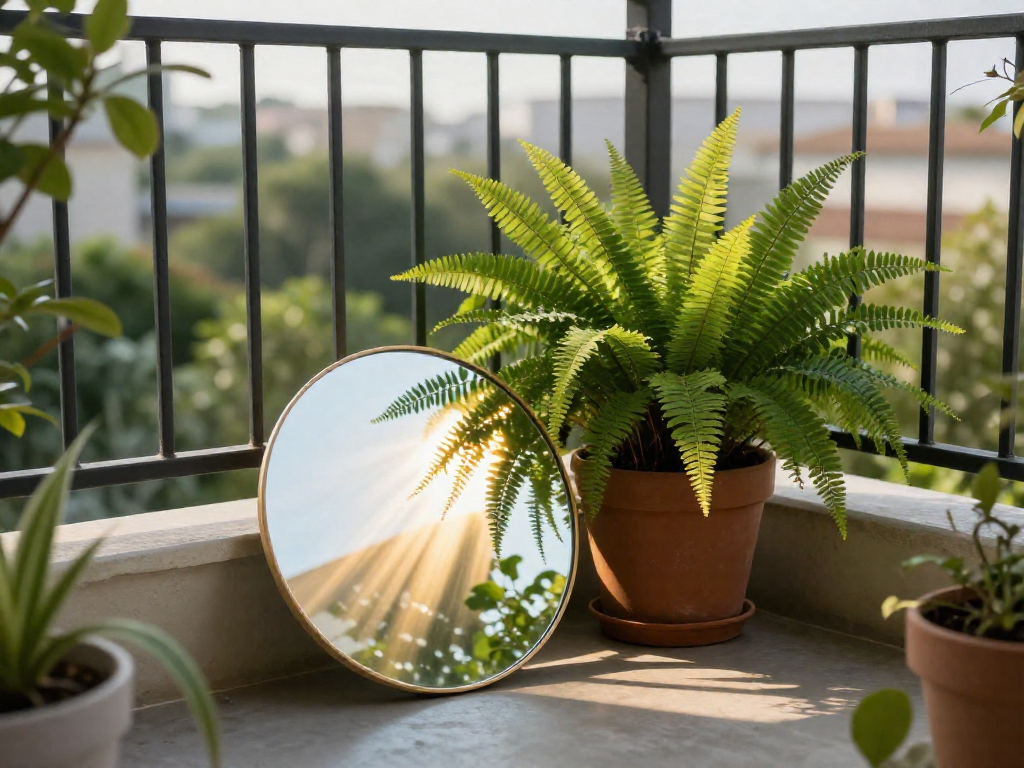
Position weatherproof mirrors on dark walls – a mirror placed opposite a light source can virtually double the reach of those rays. Choose acrylic or outdoor-rated mirrors that stand up to humidity and wind, and angle them to send light onto shaded pots without creating glare inside your home. A small, strategically hung mirror can transform a gloomy wall into a secondary light source.
Paint your balcony walls and floor in white or pale beige – these light hues act like a giant reflector, amplifying ambient brightness. If you rent, look for removable wallpaper or outdoor-safe peel-and-stick tiles. For a permanent touch, choose a balcony-specific paint that resists mildew. The difference in overall luminosity is immediate and makes your space feel more open, too.
Use reflective mulch, aluminum foil, or light-colored pebbles around pots – spreading a layer of white pebbles or tucking foil (shiny side up) under leafy canopies bounces light from below, helping lower leaves that often struggle in shadow. You can also find commercial reflective mulches designed for container gardens. Even a light-colored saucer placed under a pot contributes to a brighter microclimate.
Watch out for scorching – intense, focused reflections can be too much for tender foliage, especially during peak sun hours. If you notice bleached spots or crispy edges, simply adjust the mirror angle or swap in a less direct reflector like matte white surfaces. Observe your plants for a few days after any change; they’ll tell you if the extra light is welcome or overwhelming.
Choose Lightweight, Light-Colored Pots and Proper Soil
When every ray of sunlight counts on a small balcony, the pots you choose can make a surprising difference. Dark containers absorb heat and can bake delicate roots, while pale, reflective pots help keep soil temperatures steady and even bounce a little extra light back onto your plants. Lightweight materials also make it easier to shift pots as the sun moves—or when you simply want a fresh arrangement.
Here’s what works best in limited-light spaces:
- Pick light-colored pots: White, cream, soft pastels, or even silver-hued containers reflect sunlight instead of trapping it, reducing temperature swings and preventing rapid drying.
- Go breathable: Terracotta, unglazed clay, and fabric grow bags allow air to circulate through the walls, discouraging rot and keeping roots oxygenated. They’re also typically lighter than glazed ceramic or stone, perfect for balcony weight limits.
- Drainage is non-negotiable: No matter how shady your corner, standing water is a problem. Every pot must have at least one good drainage hole. If your favorite decorative pot lacks one, nest a plain nursery pot inside and empty any excess water after rain.
- Use the right soil mix: Look for a moisture-retentive but well-draining blend. A simple recipe: two parts high-quality potting mix, one part perlite or vermiculite, and a handful of compost or coco coir to hold onto moisture without getting soggy. This combo reduces how often you need to water while still letting roots breathe.
By pairing reflective pot colors with a breathable container and a forgiving soil mix, you’ll help your plants thrive even where sunlight is scarce.
FAQ
How do I know if my balcony gets enough light for plants?
Observe your balcony at different times of day to map where and how long direct sun hits. Full sun means at least six hours of direct light, while partial sun/shade gets three to six hours. If you only have dappled or reflected light, choose plants labeled for low light or shade.
Can I use grow lights to supplement natural light on my balcony?
Yes, especially if your balcony is deeply shaded or faces north. Choose compact, weather-resistant LED grow lights and set them on a timer to extend the daylight period for your plants. Just be sure any electrical setup is safe for outdoor use.
What are the best plants for a shady balcony?
Many foliage plants thrive in low light, such as ferns, hostas, and calatheas. Flowering options like impatiens, begonias, and peace lilies can add color without direct sun. Always check the plant tag for shade tolerance before buying.
How often should I rotate my pots for even light?
Turn each pot a quarter turn every time you water, or about once a week. This prevents plants from leaning toward the light and encourages balanced growth. Monitor how quickly they respond and adjust frequency if they still stretch.
Is it safe to hang heavy pots on my balcony railing?
It depends on your railing’s strength and mounting method. Use sturdy brackets rated for the pot’s weight when fully watered, and avoid overloading the railing. If unsure, consult your building management or choose lighter containers and secure them with extra safety ties.