Electric Scooters vs Petrol Scooters: Which Makes Sense for Your Wallet and the Malaysian Climate?
You’re stuck in the morning jam on the Federal Highway, eyeing the fuel gauge creeping lower as petrol prices hover. You’ve heard electric scooters can slash your monthly bills and help the planet—but is Malaysia ready for them, and are they ready for Malaysia?
The Real Cost of Going Electric: Upfront vs Long-Term
For most Malaysian commuters, an electric scooter is a genuinely viable alternative to a petrol scooter – but only if you can stomach the higher upfront cost. The long-term savings and low maintenance tip the wallet maths in its favour.
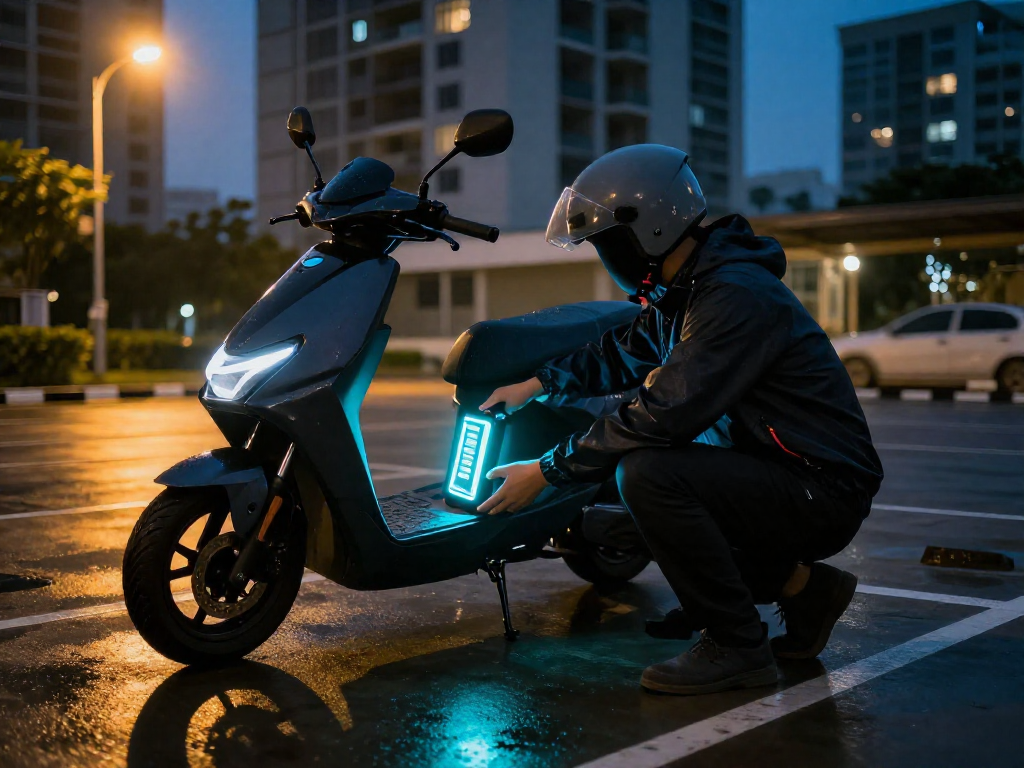
Petrol scooters like the Honda Wave or Yamaha Ego sell for RM5,000–RM7,000. Entry-level electrics such as the Niu NQi or Eclimo ES-11 start around RM8,000 and climb to RM12,000 with a dual battery. That initial gap is real, yet a full charge rarely exceeds RM1.50, while a tank of RON95 easily tops RM10. Over a year of daily commuting, the fuel difference alone can exceed RM1,000.
Road tax and insurance add to the electric advantage. Electric motors fall into the lowest road-tax bracket—just RM2 annually, versus RM30–RM80 for a 125cc–150cc petrol scooter. Insurance premiums also lean lower because insurers view electric motors as low-risk. Don't hold your breath for big government rebates: direct cash incentives for two-wheelers are still scarce nationally. The true rebate is the ongoing operation cost you bank each month.
Factor in a few hidden costs before you commit. A proper wall charger for home use adds RM500–RM800. Battery packs degrade and typically need replacement after 3–5 years of daily riding, at a cost of RM2,000–RM3,000. Spread that over half a decade, and it still undercuts regular engine servicing and belt changes on a petrol bike. Just steer clear of obscure imported brands—parts are hard to find when something fails.

Fuel vs Electricity: What You’ll Really Pay Per Kilometer
The per-kilometer numbers are where electric scooters pull miles ahead, and the gap only widens as you pile on the daily commute. Take a typical automatic 150cc petrol scooter that sips about 45 kilometers per liter on Malaysian roads. With RON95 holding steady at RM2.05 per litre (the government-capped price most of us fill up with), you’re looking at roughly 4.6 sen for every kilometer. That’s the baseline. Step up to a hyper-efficient 125cc kapchai that squeezes 60 km/L, and you’re still paying 3.4 sen/km—nowhere near what an electric scooter can do.
Now plug in an electric scooter. Most urban commuter models like the NIU NQi or similar 3kW-class scooters consume around 35 watt-hours per kilometer from their battery. But energy from the wall socket isn’t perfectly transferred; typical onboard chargers run at about 85% efficiency. So the real consumption at your home meter is closer to 40 Wh/km. With the domestic electricity tariff currently sitting at 21.80 sen/kWh for the first 200 kWh under Tenaga Nasional’s residential rate, that kilometer costs just 0.87 sen. Even if you slip into the higher tariff block (33.40 sen/kWh above 600 kWh), you’re at 1.34 sen/km. Either way, electric commuting is at least three to five times cheaper than petrol—before we even talk about engine oil, spark plugs, or belt replacements.
Let’s make it real with a 30-kilometer daily round trip, which covers the typical Klang Valley commute from a suburb like Puchong into the city. Over a 30-day month, you rack up 900 kilometers. The petrol scooter swallows 20 liters and costs you RM41 (or 15 liters/RM30.75 for an ultra-efficient kapchai). Your electric scooter draws roughly 36 kWh from the wall, adding a paltry RM7.85 to your TNB bill. That’s a monthly saving of RM23–33, piling up to RM276–408 a year—enough for a full-face helmet upgrade or a year’s insurance premium.
And here’s where things get even sweeter: free charging spots. Many large malls (Sunway Pyramid, Mid Valley) and office towers now offer complimentary EV bays, often tucked near the motorcycle parking. If you can top up while you work or shop, your daily energy cost effectively drops to zero. Even a partial top-up at a free station slashes your home charging bill. Combine that with the electric scooter’s lack of engine oil changes, air filters, and frequent belt swaps, and the long-term wallet advantage tilts decisively toward electrons over petrol.
Can It Handle the Daily Grind? Speed, Range, and Traffic Reality
For the typical Malaysian commuter weaving through KL’s morning crawl, an electric scooter’s performance hinges on where and how far you ride. Most affordable models like the NIU NQi or Eclimo ES-11 top out at 60 to 70 km/h. That’s enough to keep pace with city traffic but bars you from highways, where the minimum speed limit of 70 km/h makes them a non-starter. If your route touches the LDP or NKVE even for a few exits, you’ll need a petrol scooter—or a pricier electric like the NIU MQi GT, which can briefly hit 80 km/h but still risks getting tailgated in the fast lane.
Range is where electric scooters demand a mindset shift. Manufacturers quote 60–80 km on a charge, but KL’s reality is far thirstier. Stop-and-go jams, the constant drain of LED lights and digital dash, and the tropical heat that saps lithium-ion efficiency can slash real-world range to 40 km or less. A commute from Cheras to KL Sentral and back, roughly 35 km, might leave you with a nail-biting reserve. If your office doesn’t offer a charging point, a round-trip across town can turn into a game of battery chicken. Charge times of 4–6 hours mean you’ll be plugging in overnight like a phone, and midday top-ups are rarely practical. Petrol riders just refuel in two minutes and forget it.
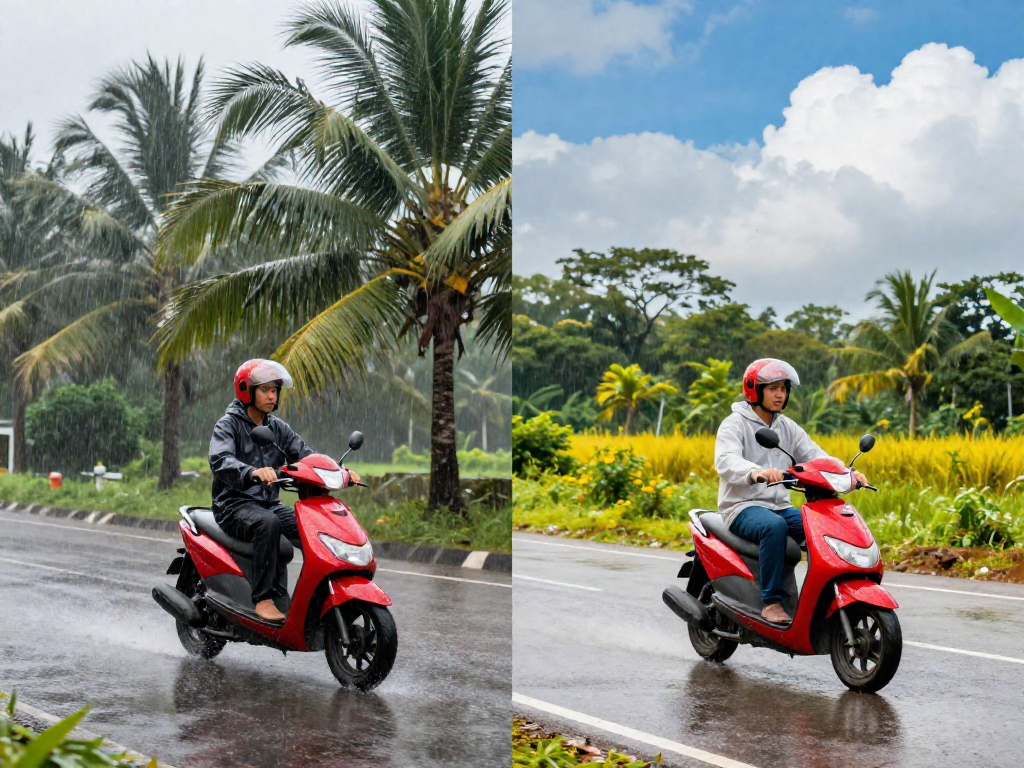
Thankfully, electric motors excel where petrol engines lose their breath: pulling away from lights and climbing flyovers. The instant torque makes the scooter zippy off the line, and even the steep ramps near Mid Valley or the Jalan Tun Razak flyover won’t bog you down. The low-slung battery pack also gives a planted feel, though the smaller 10- or 12-inch wheels still demand caution on rough tarmac. Regenerative braking is a subtle perk—every time you slow for traffic, you’re topping up the battery just a bit, a trick no petrol scooter can match. When the monsoon hits, don’t fret—most electric scooters carry IP54 or IP67 waterproof ratings, with sealed hubs and connectors that shrug off torrential rain as well as any petrol scooter. In fact, because the motor and controller are fully enclosed, an electric scooter can often power through a flooded road that would leave a petrol scooter’s belt drive slipping helplessly. Just budget for the same good tyres you’d fit to a petrol ride to cut through standing water.
Charging Woes: Why Your Home Matters More Than You Think
Even the most efficient electric scooter turns into a headache if you can’t plug it in without a daily battle. For Malaysian riders, the real filter is your living space—not the scooter’s range or torque. Most local e-scooter offerings (NIU, Vmoto, and Eclimo) come with removable lithium packs, but they need a standard 3-pin socket, shelter from rain, and enough airflow to shed heat. A full charge takes four to six hours; overnight top-ups are the norm. If you live in a landed house with a porch or a carport you control, it’s laughably simple. Roll in, pop the cord, and forget until morning.
The picture flips the moment you’re in a condo or apartment. Shared parking lots rarely have accessible power points at every bay. Body corporate rules often forbid trailing extension cables through common areas, and many management offices cite fire-safety guidelines to block any improvised charging setup. Unless your building has dedicated EV-ready bays—still a rarity for two-wheelers—you end up lugging the battery upstairs. A 5 kg pack is manageable; an 11 kg unit, plus a sweaty walk to the lift, quickly wears out the novelty. Factor in a small apartment with limited storage and you’ll dread the nightly ritual.
Public charging isn’t the safety net riders hope for. Stations around KL, Penang, and JB are built for four-wheelers, with Type 2 plugs and heavy cables. A handful of ChargeNow or Shell Recharge spots have 13 amp sockets, but they’re not designed for scooters and aren’t widely distributed enough to anchor a daily commute. Relying on public infrastructure means planning every journey around a charging window—defeating the purpose of a nimble runabout.
The spare-battery fantasy collapses under real-world weight and cost. Swappable packs from Gogoro-style networks might work in Taiwan, but without a dense swapping kiosk network in Malaysia, you’d be buying a second unit for RM1,500–3,000 and carrying it in the underseat bucket. That’s extra mass, less storage, and a price tag that narrows the scooter’s value proposition. The bottom line: if your home setup doesn’t offer a dry, secure socket within arm’s reach of where you park, a petrol scooter still wins on everyday convenience.
Greener or Greenwashed? The Environmental Catch
Electric scooters promise zero tailpipe emissions, but the real environmental math depends on how your electricity is generated. In Malaysia, about 80% of the grid runs on natural gas and coal. So when you plug in, you're largely burning fossil fuels remotely. Per kilometer, a typical electric scooter charged from the Malaysian grid often emits nearly as much CO₂ as an efficient petrol scooter, once you account for generation and transmission losses.
Then there’s the battery problem. Lithium-ion cells require cobalt, nickel, and other mined materials, and manufacturing them is energy-intensive. At the end of their life, most batteries aren't recycled — they end up improperly dumped, leaching toxic heavy metals. Unlike lead-acid batteries, lithium-ion recycling is still rare and expensive in Southeast Asia, making that green badge feel premature.
On the other hand, electric scooters do deliver one clear environmental win: they're whisper-quiet. The reduction in noise pollution is undeniable, especially in dense urban areas like KL where two-stroke engines often dominate. If your motivation is primarily to make your own commute less of a din, an e-scooter definitely delivers.
Surviving Malaysia’s Heat and Humidity: Which Scooter Lasts?
Electric scooters promise quiet, emission-free rides, but Malaysia’s relentless heat and humidity pose a silent threat to their most expensive component: the battery. Lithium-ion cells degrade faster when consistently operated above 30°C, and combined with tropical moisture, you’re looking at accelerated capacity loss and potential corrosion on connectors. While European riders might enjoy 5–7 years from a pack, local electric scooter owners often report noticeable range drops after just 2–3 years. The lack of active thermal management (common in cheap commuter models) means leaving your scooter parked in the sun can bake the battery, permanently harming its health. If you don’t have a shaded, well-ventilated parking spot, an electric scooter turns into a costly chemistry experiment.
Petrol scooters aren’t immune to heat either. Stop-and-go traffic in KL can push engine temperatures into risky territory, especially on air-cooled singles that rely on constant airflow. Overheating thins the oil, accelerating wear, and a clogged radiator or failing fan on a liquid-cooled model can lead to expensive repairs. But the raw reality is that Malaysia’s mechanic network is built to fix these problems—every second shop knows how to replace a piston or flush a cooling system. Electric scooters, by contrast, might have fewer moving parts, yet when a battery management system or motor controller fails, you’re often stuck waiting for proprietary parts and a technician trained in high-voltage systems.
Resale value tells the same story: a five-year-old petrol scooter with a service history still attracts buyers, but a used electric model feels like a gamble. Buyers fixate on the battery’s remaining life, driving prices down sharply. For now, if you plan to ride daily through monsoon and traffic and want minimal hassle, a well-maintained petrol scooter remains the tougher, more predictable workhorse. Electric only makes sense if you can guarantee cooled storage, short trips, and a willingness to accept that the battery is a wear item you’ll likely replace before the scooter itself wears out.
The Verdict: Which Rider Should Choose What?
Electric scooters suit riders with a predictable short loop and landed-house charging. If your daily commute is under 30 km inside town, the silent, zero-maintenance ride pays back the higher purchase price within two years thanks to paltry electricity bills. Without a personal power point—common in condos—the charging friction alone makes petrol the smarter default.
Petrol scooters still own the long-distance, go-anywhere role. A no-frills 110 cc kapcai costs significantly less upfront, refuels in two minutes anywhere, and handles highway speeds for that occasional trip out of the Klang Valley. You’ll spend more on fuel and routine oil changes, but you’re buying flexibility that electric models just can’t match yet.
The market is moving fast: within three to five years, swappable-battery stations at petrol kiosks could level the playing field, delivering electric convenience to apartment dwellers. Until that grid appears, let your living situation and mileage decide. Over three years of 30 km daily riding, an electric scooter’s running costs can be a fraction of petrol’s, but the initial price gap means total spend ends up surprisingly close. For high-mileage commuters with a garage, electric pulls ahead; for everyone else, petrol keeps more ringgit in your wallet from day one.