DIY Fixes vs When You Should Just Go to a Mechanic
Picture this: you’re about to leave for work and your bike won’t start. You could tinker with it yourself, but is it worth the risk? Many riders face this dilemma. This guide helps you decide when to grab the wrench and when to leave it to the pros.
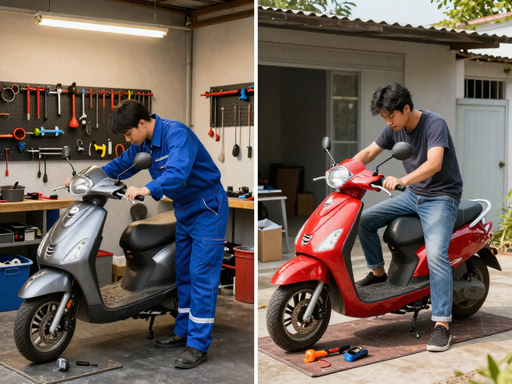
Common DIY Fixes That Save Money
Taking care of your own scooter or motorbike can be deeply satisfying—and it keeps more ringgit in your pocket. Here are five straightforward maintenance jobs that most riders can tackle at home with a basic tool kit. If you're new to wrenching, each of these is a great place to start.
Oil and Filter Change
Regular oil changes are vital for engine longevity, especially in Malaysia's hot climate. You'll need a wrench, oil drain pan, funnel, new oil (check your manual for the correct grade), and a fresh filter. Warm up the engine briefly, then drain the old oil, replace the filter, and refill. Dispose of used oil responsibly—many workshops or recycling centers accept it.
Chain Cleaning, Lubrication, and Adjustment
Dust, rain, and humidity can quickly wear down a chain. With a brush, chain cleaner (or kerosene), a cloth, chain lube, and spanners for the axle nut, you can keep it in top shape. Clean the chain thoroughly, let it dry, then apply a light, even coat of lube. Finally, check the slack; most bikes call for 20–30 mm of free play, but always verify with your owner's manual.
Air Filter Replacement
A clogged air filter starves the engine of air, hurting performance and fuel economy. On many scooters and motorbikes, accessing the airbox takes just a screwdriver. Once open, replace a paper filter or, if you have a washable foam type, clean, dry, and re-oil it. This simple job can noticeably improve throttle response.
Spark Plug Inspection and Replacement
Hard starts or sluggish acceleration often point to a worn spark plug. Using a spark plug socket and wrench, remove the plug, check the electrode gap (commonly 0.7–0.8 mm for many 4-stroke engines), and look for fouling or damage. Replace if needed—always thread it in by hand to avoid cross-threading, then snug it up without overtightening.
Battery Maintenance and Terminal Cleaning
Corroded terminals can cause starting woes. Disconnect the battery (negative terminal first), then scrub the posts and cable ends with a wire brush and a paste of baking soda and water. Rinse, dry, and apply a thin coat of petroleum jelly to prevent future corrosion. For conventional batteries, top up with distilled water to the indicated level. If your bike sits unused for days, consider a maintenance charger.
When to Call a Professional Mechanic
Some repairs aren’t just tricky—they can become dangerous or expensive if done without the right tools and training. Knowing when to step back and let a pro handle the job keeps you safe and your bike legally roadworthy in Malaysia.
Here are the situations where a workshop visit is the smarter choice:
Major engine or transmission work – Opening up your engine or gearbox requires precision tools, clean-room conditions, and a deep understanding of tolerances. One misstep can lead to catastrophic failure or a costly rebuild.
ECU and advanced electronics – Modern scooters and bikes rely on electronic control units that need specialized diagnostic equipment. Guessing at sensor or wiring faults often makes the problem worse and can leave you stranded.
Brake hydraulics and internal components – Swapping pads is straightforward, but bleeding the system, fixing a leaking master cylinder, or dealing with ABS modules demands proper tools and factory-spec procedures. Air or contaminants in the brake lines compromise your stopping power.
Tire mounting and balancing – Changing tires at home without a balancing stand usually results in high-speed wobbles or uneven wear. Shops have the machinery to mount and balance safely, and many will dispose of your old rubber responsibly.
Frame and structural repairs – Bent forks or a cracked frame need professional straightening and welding that meet engineering standards. Riding with weakened chassis components puts everyone on the road at risk.
Any repair covered by warranty – Tinkering with a bike still under manufacturer or distributor warranty can void your coverage. Even if you know how, let an authorized service centre handle it to keep your protection intact and maintain your service history.
Finally, trust your gut. If a repair feels beyond your comfort level or you lack clear service data, pulling into a reputable workshop saves time, money, and stress in the long run.
Assess Your Skill Level and Toolkit
Before you pick up a spanner, take an honest look at your mechanical skills and what you have in your garage. Even the simplest jobs can spiral if you lack the right tools or know-how.
Start by checking your basic toolkit. At minimum, you’ll need a set of metric spanners and screwdrivers, a reliable torque wrench, and a paddock stand to keep the bike stable. Without a torque wrench, you risk over- or under-tightening critical bolts—both can lead to failure on the road.
If your bike is fuel-injected, consider diagnostic tools. A simple OBD2 scanner that supports your motorcycle’s protocol can read error codes and save you hours of guesswork. You don’t need a professional-grade setup, but a basic dongle paired with a smartphone app can be a lifesaver.
Next, think about your experience level. Are you comfortable following a detailed service manual step by step, or do you tend to learn by trial-and-error? Honesty here prevents stripped threads and misplaced parts. If you’ve never changed oil before, starting with a full engine rebuild is not the wisest move.
Also factor in time. Changing brake pads might be a 30-minute job for an experienced home mechanic, but your first attempt could eat up an entire afternoon. Make sure you have a clear schedule and won’t be rushed. A hurried job is often a poorly done one.
Finally, never overlook safety gear. Always wear gloves and eye protection, and work in a well-ventilated space—especially when dealing with fumes from cleaners, brake fluid, or fuel. Keep a fire extinguisher within reach, just in case.
By honestly evaluating your skills and equipment, you’ll know whether the task ahead is within your comfort zone or better left to a professional.
The True Cost: DIY vs Mechanic
When weighing up a DIY fix against handing your bike over to a mechanic, the price tag on the parts is only the start. A genuine real‑world comparison needs to account for several hidden costs that can tip the balance surprisingly quickly.
Start with the parts themselves. OEM components often command a premium due to their guaranteed fit and reliability, while aftermarket options can slash the upfront cost — sometimes by half. However, a cheaper aftermarket part might wear sooner or perform differently, effectively raising the long‑term expense. Then there’s the question of tools. Even a straightforward job like changing brake pads might need a torque wrench, piston compressor, or specific socket sets. If you’re building a toolkit from scratch, expect a one‑time spend that could easily rival a few workshop visits. Borrowing from a riding buddy or using a community garage softens this, but it’s a factor you can’t ignore.
Your own time carries a price, too. A task that takes a seasoned mechanic 30 minutes might eat up a whole Saturday morning for a careful hobbyist — time that could be spent riding instead. Factor in the risk of mistakes: rounding off a bolt, over‑torquing a fastener, or misaligning a component can turn a simple job into an expensive rescue mission. A stripped oil drain plug, for example, might mean replacing the entire sump. In contrast, for a rough estimate, mechanic labor rates in Malaysia typically range from RM30 to RM80 per hour, depending on location and whether it’s an independent workshop or a specialised service centre. Finally, don’t overlook warranty considerations. Many new bikes and aftermarket extended warranties require that servicing is performed by a certified technician; skipping that with a DIY job could void your coverage when you need it most. Weigh all of these elements together, and the true cost picture becomes much clearer.
A Decision Flowchart: DIY or Mechanic?
When your bike needs attention, run through these questions before picking up a spanner. Use this as a mental checklist—or even print it out as a quick garage reference.
-
Is the repair on the common DIY list?
Basic tasks like oil changes, spark plug swaps, chain adjustments, and brake pad replacements are generally safe home territory. If it’s not on the list from earlier in this article, pause here. -
Do you have the right tools and workspace?
Without a torque wrench, paddock stand, or a clean, covered area, even a simple job can go sideways. Malaysian weather is unpredictable—working in a cramped porch during a thunderstorm isn’t ideal. -
Have you successfully done a similar repair before?
First-timing a carburetor clean on your daily commuter is risky. Build confidence on a non-essential project first, or buddy up with an experienced friend. -
Is it a safety-critical system?
Brakes, steering, suspension, and tyres directly affect your control and stopping. If a mistake here could lead to an accident, it’s not worth the gamble. Even a small error in bleeding brakes can be disastrous on busy Malaysian roads. -
Could a botched job cause major (expensive) damage?
Stripping an engine bolt or misaligning a transmission component can turn a cheap fix into a workshop nightmare. If a failed repair means a tow truck and a hefty bill, let a pro handle it.
If you answered “no” to any of these—or especially to multiple—hand it over to a trusted mechanic. There’s no shame in respecting your limits; the smartest riders know when to ride to the shop instead of the hardware store.
FAQ
Can I fix a punctured tire myself?
Yes, a tubeless tire puncture can often be temporarily sealed with a plug kit, which is handy for roadside emergencies in Malaysia. For a permanent fix or if the tire has a tube, it’s safer to visit a mechanic. Always carry a basic repair kit and know your limits.
Do I need special tools to change brake pads?
Usually, a set of Allen keys, wrenches, and a caliper piston retractor are enough. If your bike model requires specific tools, check the manual; otherwise, seek a mechanic to avoid safety risks from improper installation.
Is it safe to do electrical repairs on my bike?
Simple tasks like swapping bulbs or fuses are safe if you disconnect the battery first. For complex wiring, ECU issues, or charging system faults, it’s best to use a professional to prevent damage or electrical fires.
What are the risks of DIY repairs voiding warranty?
Using non-genuine parts or unapproved repair methods may void your warranty. Stick to the manufacturer’s service schedule and authorized centers during the warranty period, and keep all documentation.
How much money can I save by doing maintenance myself?
You can save labor fees on basic upkeep like oil changes and chain cleaning, possibly RM50–150 per service. For major repairs, DIY mistakes can be costly, so focus on simple tasks to keep savings reliable.