How to Handle a Roadblock or Police Stop Without Panicking
Practical guide on documents, behavior, and legal rights.
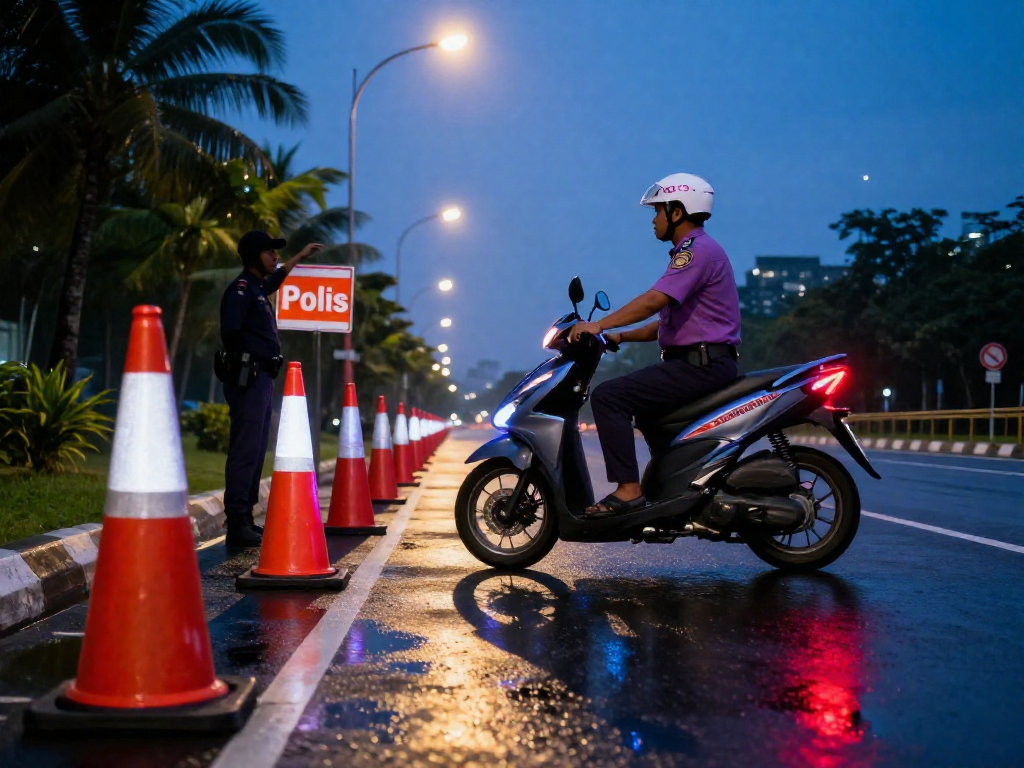
Preparation: Documents and Mindset Before You Ride
The moment you see blue lights ahead, your pulse might quicken. Your rights during a Malaysian police roadblock are straightforward: you deserve respectful treatment, and you must produce a valid driving licence, road tax, and insurance when stopped. The real secret to handling a stop without panic isn’t knowing some legal loophole; it’s having everything ready and your head in the right space.
Before you even start the engine, make sure your documents are on point. Carry your original driving licence, or save a digital copy on your phone via the JPJ app—it’s officially recognized and shows your licence and road tax status in seconds. For insurance, keep a soft copy in your email or a dedicated folder. Don’t stuff loose papers where they get crumpled. Use a slim cardholder or a clear phone case—something you can grab without a frantic search.
Organisation isn’t just neat; it’s strategic. When you’re not fumbling, you look confident, and that alone can defuse tension. Accept that roadblocks are a routine part of the road, not a personal attack. Police are usually checking for drunk driving, expired licences, or stolen motorcycles—not hunting for minor slip-ups. Approach the stop with a quiet willingness to comply. Switch off your engine, lift your visor, and greet the officer politely. Keep movements slow and deliberate. If you’re anxious, take a deep breath and remind yourself you’ve got the paperwork sorted.
Digital tools make this smoother. The JPJ app frees you from a folded road tax disc, and your insurer likely has an app too. Just keep your phone charged—a dead battery at a roadblock is trouble. A power bank in your jacket is a smart backup. Cooperation almost always leads to a quick, hassle-free stop. A calm, prepared rider is usually sent on their way in under a minute. So before you ride, ask: licence? Check. Road tax? Check. Insurance? Check. Right mindset? Check. Now enjoy the ride.
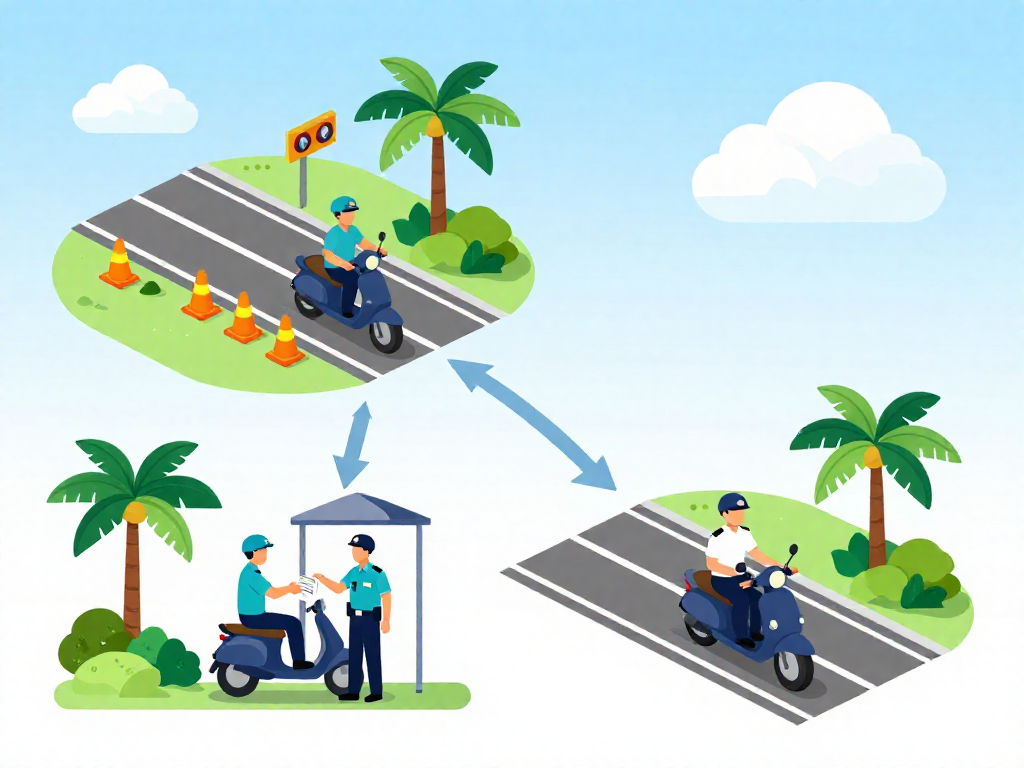
At the Scene: Step-by-Step Guide to a Smooth Stop
The moment you see blue lights or a uniformed wave, you take control. Signal left and ease off the throttle. Don’t brake hard—that looks guilty. Coast to a stop well before the cone line, where the officer can clearly see you aren’t fiddling with anything under the seat. A scooter’s narrow profile lets you tuck neatly to the side without blocking traffic. Turn off the engine with a deliberate motion, kick the sidestand down so the bike stays planted, and keep both feet flat on the tarmac. Your hands? Rest them on the grips or the handlebar centre. A rider reaching into a jacket or popping the seat before being asked immediately looks like they’re hiding something. If your helmet is a full-face, flip up the visor so the officer sees your eyes; on a half-face, just make eye contact. If the stop is during heavy rain, it’s fine to wait for the officer to approach rather than dismounting into a puddle—stay put unless told otherwise.
When the officer reaches you, a calm “Selamat tengahari, Tuan” or a simple “Salam” sets the tone more effectively than scrambling for documents. Address them as “Encik” or “Tuan” — never “Bro”. Let them speak first. The usual opener is “Lesen memandu dan kad pengenalan.” At that point, tell them where your license and IC are before you move: “Ada dalam dompet belakang, Tuan” or “Di dalam box depan, Encik.” That pause matters. Digging into a cargo net or rummaging through a bag without a word makes everyone tense. If it’s a digital licence on your phone, wait until they acknowledge it before opening MyJPJ; a screen suddenly lighting up can be misread. Hand over physical cards with both hands, not a fling. Answer their questions—where you’re heading, where you’re coming from—with short, truthful sentences. The less you ramble, the sooner they can process you.
If you genuinely don’t understand why you were stopped, don’t challenge the officer’s authority in a group of other riders or with an audience. Instead, after they’ve checked your documents, you can ask, “Tuan, boleh saya tahu apa kesalahan saya?” Speak as if you’re simply clarifying, not arguing. The officer might explain or just hand back your cards—in either case, don’t push it. What about when they ask to look inside your box or under your seat? You have every right to ask whether there is reasonable suspicion. A calm “Tuan, adakah ada sebab yang munasabah untuk pemeriksaan ini?” is not obstruction—it’s a legitimate question under Section 30 of the Police Act 1967. However, if the officer states a reason or simply says it’s a routine check, comply without physical resistance. Keep your body language open: lift the box lid yourself, step back, and let them look. Do not hover or pepper them with “Why?” questions.
What you absolutely never do is snap, “Tahu tak bapak siapa saya?” or worse, twist the throttle and run. Fleeing a roadblock gives police grounds to pursue, and you’ll be staring at a charge under Section 186 of the Penal Code for obstructing a public servant—on top of whatever minor offence they were after. Just as ruinous is offering a folded note. A whispered “boleh settle, Tuan” turns a traffic stop into a bribery attempt under the MACC Act 2009, and the officer’s body camera or a hidden operation will bury you faster than any saman. Even a genuine question fired with aggression, or recording the officer’s face with a phone shoved in their space, turns a two-minute check into a roadside argument that never ends well. Stay polite, stay unhurried, and you’ll usually leave with a nod or a ticket you can handle at the balai.
Your Rights in a Nutshell
Police officers can stop any vehicle, including your scooter or motorbike, for routine checks without needing a specific reason. This authority is granted under Seksyen 24(1) of the Police Act 1967. When stopped, you are legally required to present your driving license, road tax, and insurance certificate. A digital copy via the JPJ app or e-cover note is perfectly acceptable, so keep your phone charged and accessible. Refusing to show these documents is an offence and can quickly sour the interaction.
However, a routine document check does not automatically permit a search of you or your bike. For a search, the officer must have reasonable suspicion under Seksyen 23(2). You have every right to ask, "What is the reason for the search?" or simply "Mengapa cari saya?" If the officer cannot articulate a concrete basis, you can politely decline consent, though never resort to physical resistance — that would escalate into obstruction. If the search proceeds despite your objection, note the details and seek legal advice later. In any stop, you can request the officer’s name, rank, and badge number. Write it down or commit it to memory. This is not defiance; it’s a basic safeguard that keeps encounters accountable.
Beyond your identity and vehicle documents, you are not obligated to answer questions about your route, cargo, or activities. You have a right to remain silent, and exercising it does not imply guilt. A calm "I prefer not to answer further questions" (or "Saya ingin berdiam diri") is sufficient. If the officer persists, ask directly: "Am I being detained or am I free to go?" This forces clarity on your status — if you are not detained, you are legally free to leave after the document check.
Recording the encounter is legal in Malaysia, but do it discreetly to avoid provoking unnecessary tension. Set your phone to record video and place it in a handlebar mount or on the dashboard; don’t thrust it toward the officer’s face. If questioned, simply state that you are recording for your own record. Should the officer order you to stop, comply with verbal commands but you are under no obligation to delete footage. Stay calm and respectful throughout. Panicking or getting angry only amplifies tension. Knowing these rights grounds you with the confidence to navigate a roadblock smoothly without surrendering your protections.
Common Pitfalls to Avoid
The fastest way to escalate a routine stop is to show panic or attempt to flee—even a nervous throttle blip raises suspicion. Keep your documents ready; fumbling for a license or insurance slip makes you look unprepared. Arguing with the officer never ends well; stay polite. Never offer a bribe—it’s a serious crime in Malaysia with severe consequences. And don’t assume you’re powerless; knowing your rights helps you stay composed, but asserting them aggressively can backfire.
When Things Escalate: A Quick Guide
If you feel the stop is unfair, keep your composure and never resist. Quietly note the officer's name, badge number, the time, and location. When it's safe, discreetly record the interaction. Later, file a report with the IPK (State Police Headquarters) or use the online complaint portal at the Royal Malaysia Police website.
FAQ
What documents do I need to show at a Malaysian police roadblock?
At a Malaysian police roadblock, you must present your original driving license, vehicle road tax (or its digital equivalent), and valid insurance cover note. Keep these documents easily accessible in your bike's storage or a waterproof pouch to avoid fumbling. The road tax disc is no longer required to be displayed on the windshield, but you can show it via the MyJPJ app.
Can I record the police during a stop?
Yes, you can record the police during a stop, as long as you do not interfere with their duties. Malaysian law does not explicitly forbid recording public officers executing their duties, but you should inform them politely that you are recording for your own record. Avoid aggressive or confrontational behavior.
What should I do if the police officer is rude or asks for money?
Remain calm and polite; do not give money or accept any request for a bribe. If an officer is rude or demands money, note their name and badge number if visible. You can lodge a complaint later with the police's Integrity and Standards Compliance Department (JIPS) or through the police's e-complaint system. Giving a bribe is illegal and can get you into more trouble.